Friday, March 6, 2015

Levels Of Hearing Loss

Doctors classify hearing loss by degrees: from mild, moderate, severe, or profound. As the stages progress, the person with hearing loss becomes increasingly cut off from the world of speech and sounds. The symptoms of these categories include:

Levels of Hearing Loss

Mild hearing loss. One-on-one conversations are fine but it becomes hard to catch every word in the presence of background noise.
Moderate hearing loss. You often need to ask people to repeat themselves during in-person and telephone conversations.
Severe hearing loss. Following a conversation is almost impossible without a hearing aid.

Profound hearing loss. You cannot hear other people speaking, unless they are extremely loud. Without a hearing aid or cochlear implant you cannot understand speech.
Degree of hearing loss refers to the severity of the loss. The table below shows one of the more commonly used classification systems. The numbers are representative of the patient's hearing loss range in decibels (dB HL)
Normal–10 to 15
Slight16 to 25
Mild26 to 40
Moderate41 to 55
Moderately severe56 to 70
Severe71 to 90
Profound91+

Levels of hearing loss

We use the term 'hearing loss' to cover all kinds of deafness.
There are four different levels of hearing loss, defined by the quietest sound that people are able to hear, measured in decibels (dB).

Mild hearing loss:

  • Quietest sound: 25 - 39 dB.
  • Can sometimes make following speech difficult, particularly in noisy situations.

Moderate hearing loss:

  • Quietest sound: 40 - 69 dB.
  • May have difficulty following speech without hearing aids.

Severe hearing loss:

  • Quietest sound: 70 - 94 dB.
  • Usually need to lipread or use sign language, even with hearing aids.

Profound deafness:

  • Quietest sound: 95 dB+
  • Usually need to lipread or use sign language.

Wednesday, March 4, 2015

What Are The Signs I'm Losing My Hearing ?


The telltale symptoms that you are experiencing hearing loss are :

difficulty hearing other people clearly
misunderstanding what people say
asking people to repeat themselves
listening to music or watching television with the volume turned up high
difficulty hearing the telephone or doorbell
regularly feeling tired or stressed, due to having to concentrate closely while listening
Experiencing problems to hear words clearly when there is background noise.
Feeling of isolation because you can't follow a conversation

Signs in babies
You should consider seeing your GP if you notice that your baby or toddler:
is not startled by loud noises
does not turn towards the source of a sound while under four months old
does not say single words by the time they are one year old
notices you when they see you but not when you call their name
hears some sounds but not others

Signs in children
You should consider seeing your GP if you notice your child:
is slow to learn to talk, or they are not clear when they speak
often asks you to repeat yourself
often talks very loudly
often turns up the volume of the TV so that it is very loud
have difficulty following conversations involving more than 2 people.
think that other people sound muffled or like they're mumbling.
have difficulty hearing in noisy situations, like conferences, restaurants, malls, or crowded meeting rooms.
have ringing in your ears.
read lips or more intently watch people's faces when they speak with you.

Emotional signs:
feel stressed out from straining to hear what others are saying.
feel annoyed at other people because you can't hear or understand them.
feel embarrassed to meet new people or from misunderstanding what others are saying.
feel nervous about trying to hear and understand.
withdraw from social situations that you once enjoyed because of difficulty hearing.

Medical signs:
have a family history of hearing loss.
take medications that can harm the hearing system (ototoxic drugs).
have diabetes, heart, circulation or thyroid problems.
have been exposed to very loud sounds over a long period or single exposure to explosive noise.

Tuesday, December 9, 2014

How Do I Know When It's Time to Protect My Ears?


Photo credit: jzlomek from morguefile.com

It's time to protect your ears if :

You must raise your voice to be heard.
You can't hear someone 3 feet away from you.
Speech around you sounds muffled or dull after you leave the noisy area.
You have pain or ringing in your ears (this is called “tinnitus”) after exposure to noise.

What Causes Hearing Loss?


Photo credit: Prawny from morguefile.com

    Causes of Hearing Loss

    Several factors can cause hearing loss like ear infections(otitis media), noise, medication(ototoxic medications), advanced age, genetics.

    The WebMD website states that "Advanced age is the most common cause of hearing loss. One out of three people aged 65-74 has some level of hearing loss. After age 75, that ratio goes up to one out of every two people.

    Advanced age is the most common cause of hearing loss. One out of three people aged 65-74 has some level of hearing loss. After age 75, that ratio goes up to one out of every two people. 
      
    Researchers don't fully understand why hearing decreases with age. It could be that lifetime exposure to noise and other damaging factors slowly wear down the ears' delicate mechanics. Genes also play a role.


      Noise wears down hearing if it's loud or continuous. In some workplaces, ears are exposed to dangerous noise levels every day. To understand the impact of noise, consider this: 44% of carpenters and 48% of plumbers report some hearing loss. Other noisy lines of work include the military, mining, manufacturing, agriculture, and transportation.

    Even musicians, who literally create music for our ears, are at risk for noise-induced hearing loss. Some now wear special earplugs to protect their ears when they perform. The earplugs allow them to hear music without harming their ears' inner workings.

    Loud noise can be very damaging to hearing. Both the level of noise and the length of time you listen to the noise can put you at risk for noise-induced hearing loss. Noise levels are measured in decibels, or dB for short. The higher the decibel level, the louder the noise. Sounds that are louder than 85 dB can cause permanent hearing loss. The hearing system can be injured not only by a loud blast or explosion but also by prolonged exposure to high noise levels.


      Certain medications can impair hearing and/or balance. More than 200 medications and chemicals have a track record of triggering hearing and/or balance side effects in addition to their disease-fighting capabilities. These include some antibiotics and chemotherapy drugs, aspirin, loop diuretics, a drug used to treat malaria, and several drugs for erectile dysfunction.

    How Loud is Too Loud...to cause hearing loss?

    Dangerousdecibels has a very graphic answer to this question.


    The noise chart below lists average decibel levels for everyday sounds around you.
    Painful
    150 dB = fireworks at 3 feet
    140 dB = firearms, jet engine
    130 dB = jackhammer
    120 dB = jet plane takeoff, siren
    Extremely Loud
    110 dB = maximum output of some MP3 players, model airplane, chain saw
    106 dB = gas lawn mower, snowblower
    100 dB = hand drill, pneumatic drill
    90 dB = subway, passing motorcycle
    Very Loud
    80–90 dB = blow-dryer, kitchen blender, food processor
    70 dB = busy traffic, vacuum cleaner, alarm clock
    Moderate
    60 dB = typical conversation, dishwasher, clothes dryer
    50 dB = moderate rainfall
    40 dB = quiet room
    Faint
    30 dB = whisper, quiet library

    Monday, September 9, 2013

    Flies Exposed to Loud Noises Suffer from "Hearing Loss"

    Ridiculous, but true.  Flies and humans are not that different when it comes to hearing loss.

    fly exposed to hearing loss for hearing-loss-news.blogspot.com
    Photo credit: justcola from morguefile.com
    Daniel Eberl, researcher at The University of Iowa says “We found that fruit flies exhibit acoustic trauma effects resembling those found in vertebrates, including inducing metabolic stress in sensory cells."

    The effect on the molecular underpinnings of the fruit fly's ear are the same as experienced by humans, making the tests generally applicable to people, the researchers note.

    Friday, May 31, 2013

    Hearing Loss in Dogs : Hunting Is Bad For Your Pet's Ears

    Photo credit: jade from morguefile.com
    A couple of years ago the Mississipi State University published an article about hearing loss in dogs due to gun noise. Their conclusion was that frequent exposure to gunshots can progressively damage a dog's hearing.

    One researcher who worked on the study concluded : We are very excited about our preliminary data."
    "Practically all of the hunting dogs have some hearing loss and practically all of the non-hunting dogs have great hearing."


    The difference in hearing ability between the two test groups "is extreme," said one researcher. Ultimately, results of the study could have great consequences for hunters.

    "Perhaps in the future we will recommend the same precautions for hunting dogs as for hunters, including earplugs," one of the researchers said.
     
     You can read the original article at :

    http://www.msstate.edu/web/media/detail.php?id=1812

    Wednesday, May 8, 2013

    Ever Wondered Which Famous People Suffer from Tinnitus?

    Famous people Hearing-loss-news.blogspot.com
    Image by Dosionair via Flicker http://flic.kr/p/dprVpH
    "Hearing loss is a terrible thing because it cannot be repaired.”
    -- Pete Townshend (Guitarist from the Who)

    "I was a major glutton for volume: 'Gotta feel it, gotta hear it.' Sooner or later you're going to pay the reaper."
    -- Mick Fleetwood (Fleetwood Mack)


    Sunday, May 5, 2013

    Exciting Research with Antioxidants

    Photo credit: kakisky from morguefile.com
    For some time now, researchers have focused their attention on antioxidants and their potential benefits to prevent and even cure hearing loss. Even the Department of Defense (thousands of US GIs suffer from hearing loss and tinnitus) has shown interest and awarded $1.2 to the Southern Illinois University School of Medicine in Springfield, Ill earlier this year (Read article : http://www.hear-it.org/Antioxidants-against-noise-induced-hearing-loss)

    Monday, April 29, 2013

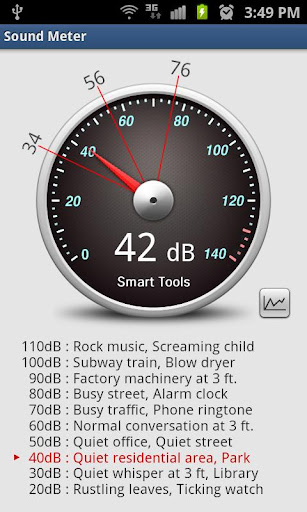
    An Application to Measure Sound

    There is a Google application that measures sound. If you want to see a video showing how it works click on the read more link below. To download it click on this link :

    https://play.google.com/store/apps/details?id=kr.sira.sound